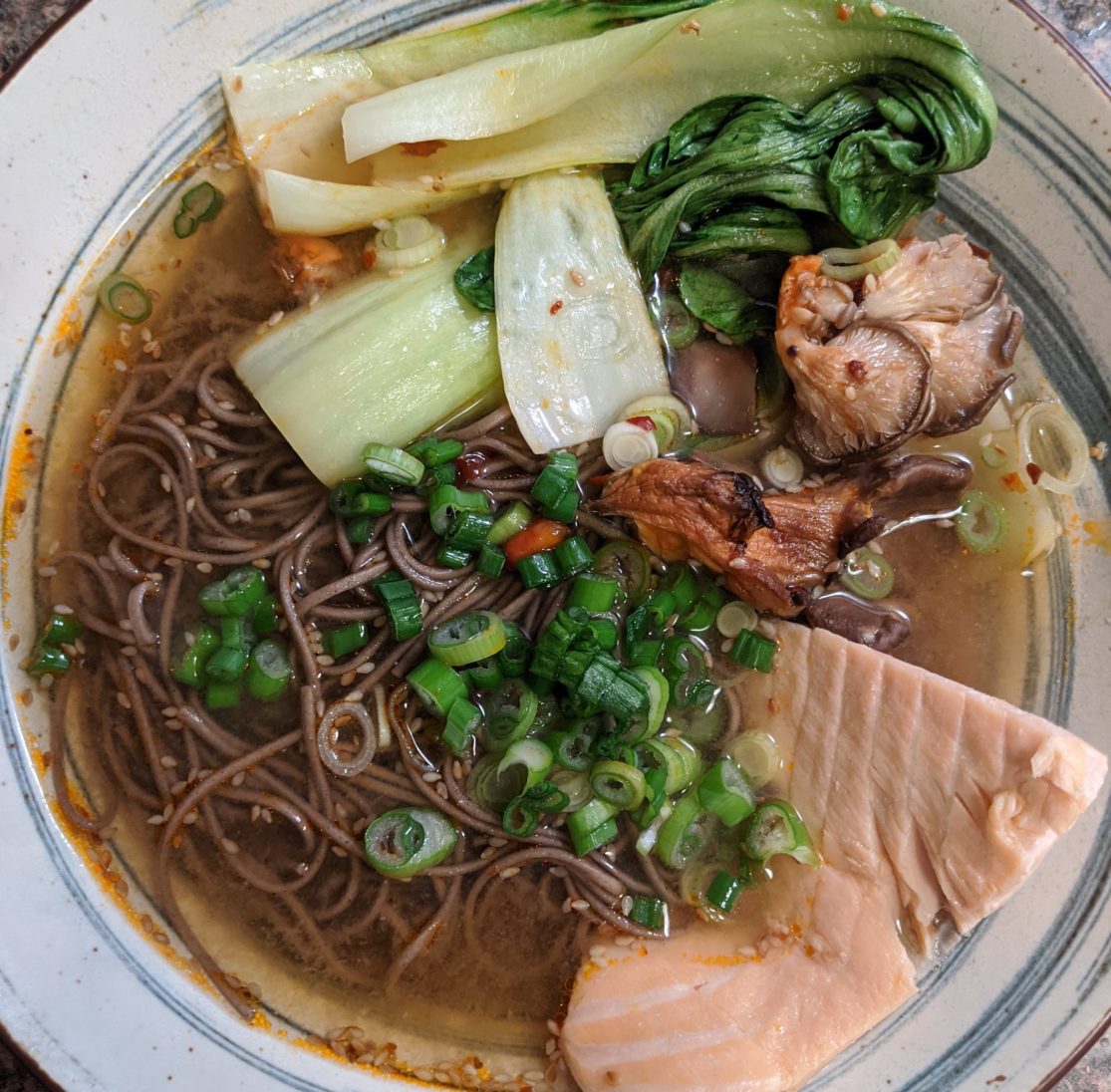
This soup is endlessly adaptable and uses a traditional Japanese dashi broth as a base. A wonderful entry point into Japanese soups and tasting notes, this soup can scale up for the days when we are finally able to cook dinner for our comrades again. For the moment, here is the recipe for one large serving for hungry fruit people. It is likely you will not be able to finish it and save the rest for lunch the next day, it will keep that long but I would not recommend storing in fridge for more than 24 hours.

Total preparation time: 45 minutes
Difficulty: Medium
Pineapples: 5/5 🍍 🍍 🍍 🍍 🍍
Read before committing: This recipe uses dashi and mirin, two ingredients that it is unlikely you will find at your regular grocery store. Order them delivered or visit your local Asian grocer.
Ingredients
Broth:
2 cups of water
2 teaspoons of dashi powder
(if you’re ambitious you can make your own dashi with konbu and katsuoboshi, I did, but honestly the difference is negligible and most Japanese people also use powder dashi)
2 teaspoons soy sauce
2 tablespoons mirin cooking wine
1 teaspoon miso paste
1 pinch of salt
1 green onion cut with a pair of scissors
Contents:
2 small bok choy bulbs or 1 large one
1 salmon fillet
1 handful of oyster mushrooms
1 additional green onion for finishing
1 portion soba noodles (they normally come pre-portioned when buying a pack)
In truth, these ingredients are just my personal preference, substitute with whatever you have on hand. The only criteria is that they can poach in a low simmer over 20 minutes. Other good ideas would be ramps, bitter greens, broccoli rabe, there are many options.
Instructions
Pour two cups of water in a pot and bring to a very low simmer, never allowing the liquid to boil.
Add the dashi powder, soy sauce, mirin, salt and green onion to the simmer until cloudy and fragrant, about 10 minutes.
Fill a separate pot with water and salt and bring to a boil. (this is for the soba noodles)
In the meantime, cut and rinse your vegetables
Sprinkle salt and pepper on your salmon fillet.
Add salmon to the broth and let it poach for 5 minutes.
Add vegetables to the broth and let poach for 10 minutes with a lid on the pot.
Drop the soba noodles in the pot of boiling water**. After three minutes, remove from water in a strainer and rinse with cold water.
At this point everything is cooked, but to make this looks as good as it tastes, follow the assembly instructions.
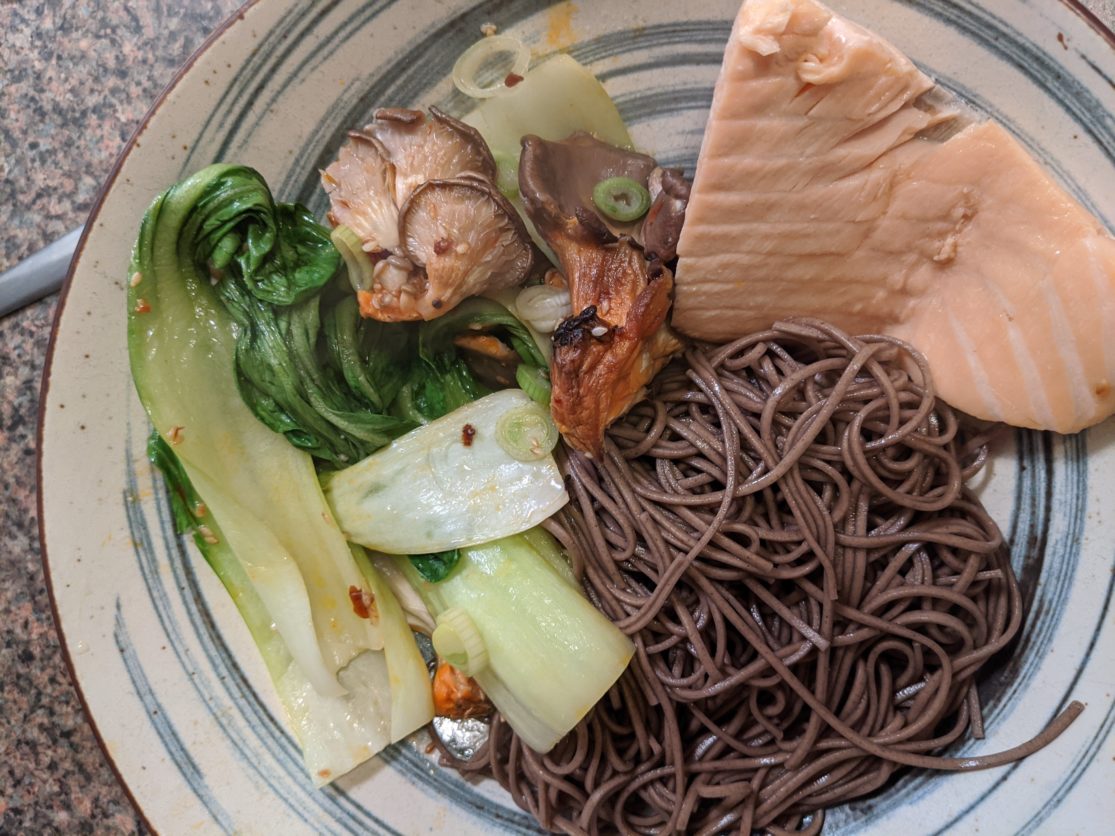
Take your rinsed soba noodles and place in one side of your soup bowl.
Remove the soup contents from the broth and arrange them one at a time in your bowl.
Slowly ladle the broth over everything.
Garnish with fresh green onion, sesame seeds, and spicy chili oil if that’s your thing. Enjoy immediately!
**You may be tempted to cook your soba noodles directly in the broth. Do not do this! The broth is not high temperature enough to properly cook the soba. Furthermore, cooking the soba in the broth would create a starchy residue, upsetting the delicate balance of this broth.